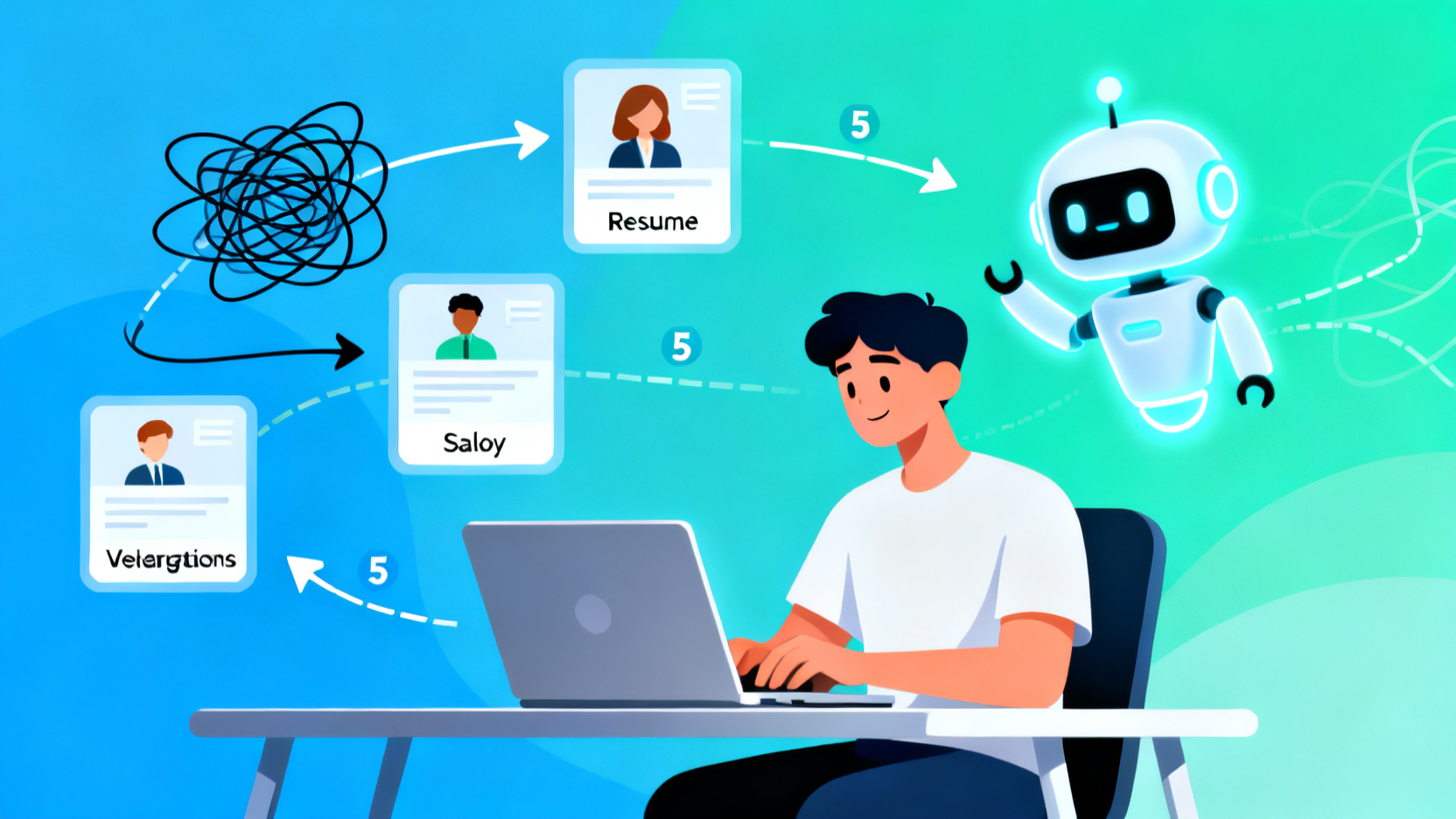
A solo content creator leveraged Monica, an all-in-one AI assistant, to overhaul her job search workflow—from resume optimization to offer negotiation. The result? A 70% reduction in time spent, higher-quality applications, and a new role secured in under a month.
The Problem: A Time-Intensive, Inconsistent Job Search for Freelance Content Creators
For freelance content creators transitioning into full-time roles, the job hunt often feels like a second job. One solopreneur—a seasoned writer with 5+ years of experience across blogs, newsletters, and SaaS copy—faced three major bottlenecks:
- Resume tailoring: Manually rewriting her resume for each role took 1–2 hours per application.
- Interview prep: Researching companies and drafting talking points was inconsistent and reactive.
- Negotiation anxiety: She lacked data-backed scripts to confidently discuss compensation.
With only 10–15 hours/week available for job hunting amid client work, she struggled to maintain momentum. After two weeks of scattered effort and zero interviews, she realized her process needed structure—and automation. As one of the best AI tools for freelance writers 2024, Monica AI offered the perfect solution.
The Solution: Monica as an End-to-End AI Career Assistant for Professionals
She adopted Monica, an all-in-one AI assistant that combines chat, writing refinement, and real-time research in one browser extension. Unlike generic chatbots, Monica works directly on any webpage—ideal for analyzing job descriptions, rewriting LinkedIn profiles, or drafting follow-up emails without context switching.
Key capabilities that made Monica valuable:
- Smart rewriting: One-click rewrites for tone, length, or audience.
- Web-aware research: Pulls live data from company sites or news during chats.
- Prompt templates: Built-in workflows for resumes, cover letters, and interview Q&A.
This aligned perfectly with her need for a lightweight, integrated tool that didn’t require learning complex AI syntax—a true AI productivity tool for busy solopreneurs.
Implementation: A 5-Step AI-Powered Job Hunt Workflow Using AI Tools for Freelancers
Here’s exactly how she embedded Monica into her daily routine:
- Resume Optimization (5 min/application)
After pasting a job description into Monica, she used the prompt:
“Rewrite my resume bullet points to match this job description using strong action verbs and quantifiable results.”
Monica highlighted relevant skills and suggested metrics-based phrasing. - Cover Letter Drafting (8 min)
Using Monica’s “Cover Letter” template, she input the company name and role. The AI generated a first draft referencing the company’s recent blog posts (via live web search), which she lightly edited. - Company Research & Talking Points (10 min)
On the company’s careers page, she activated Monica and asked:
“What are this company’s core values based on their website and recent press? Generate 3 interview answers that reflect them.”
Monica pulled insights from About pages, culture decks, and TechCrunch articles. - Mock Interview Practice
She prompted: “Simulate a 30-minute behavioral interview for a Senior Content Strategist role. Ask follow-ups based on my answers.”
Monica played interviewer, adapting questions in real time. - Offer Negotiation Scripting
When an offer arrived, she asked: “Based on Glassdoor and Levels.fyi data for [Company] in [City], what’s a competitive salary range for this role? Draft a polite counteroffer email.”
Monica synthesized compensation benchmarks and generated a professional script.
She integrated Monica with her existing stack: Notion (for tracking applications) and Gmail (for sending materials). No Zapier or coding required—just browser-based prompts. This simple setup exemplifies how AI tools for professionals can streamline even high-stakes workflows like job hunting.
Before / After Comparison
| Metric | Before AI | After AI (with Monica) |
|---|---|---|
| Time per application | 2.5 hours | 45 minutes |
| Interview conversion rate | 1 in 12 | 1 in 4 |
| Weekly job hunt hours | 12–15 | 4–6 |
| Confidence in negotiation | Low (accepted first offer) | High (secured 12% higher base) |
Timeline: From Setup to Offer in 30 Days
- Day 1–3: Installed Monica browser extension; tested prompts on 2 sample job posts.
- Week 1: Applied to 5 roles using AI-optimized materials; received 2 interview invites.
- Week 2–3: Refined prompts based on recruiter feedback; conducted 4 interviews.
- Day 28: Received and negotiated final offer.
Cost Breakdown
Monica’s Pro plan costs $10/month (or $96/year with annual billing). Before Monica, she relied on:
- Free ChatGPT (limited context, no web access)
- Manual Google research (time-intensive)
- One-time resume review service ($75)
By switching to Monica, she eliminated the $75 expense and saved ~20 hours over four weeks. At her freelance rate of $50/hour, that’s $1,000 in recovered opportunity cost.
ROI Analysis
Total investment: $10 (monthly Monica subscription)
Value generated:
- 20 hours saved × $50/hour = $1,000
- 12% higher starting salary on a $90K offer = $10,800/year
Even ignoring long-term salary gains, the immediate ROI is 10,000% in time-value recovery alone. When factoring in faster placement (she’d projected a 60-day search), the tool paid for itself within days.
Expert Insight
Job seekers often treat applications as transactional tasks. But with AI tools for content creators and freelancers, every step—from research to negotiation—can become strategic, personalized, and efficient.
Frequently Asked Questions
How did Monica AI help reduce job hunt time for a freelance content creator?
What specific features of Monica AI were used in the job search workflow?
Can Monica AI rewrite resumes to match specific job descriptions?
How much time did the content creator spend per application after using Monica?
Is Monica AI suitable for freelancers transitioning to full-time roles?
Did the creator secure a job faster using Monica AI?

Free access to GPT-4o & Claude 3.5
Claim now and boost your productivity together!
Samuel
Recommendation System Engineer
Updated Apr 17, 2026