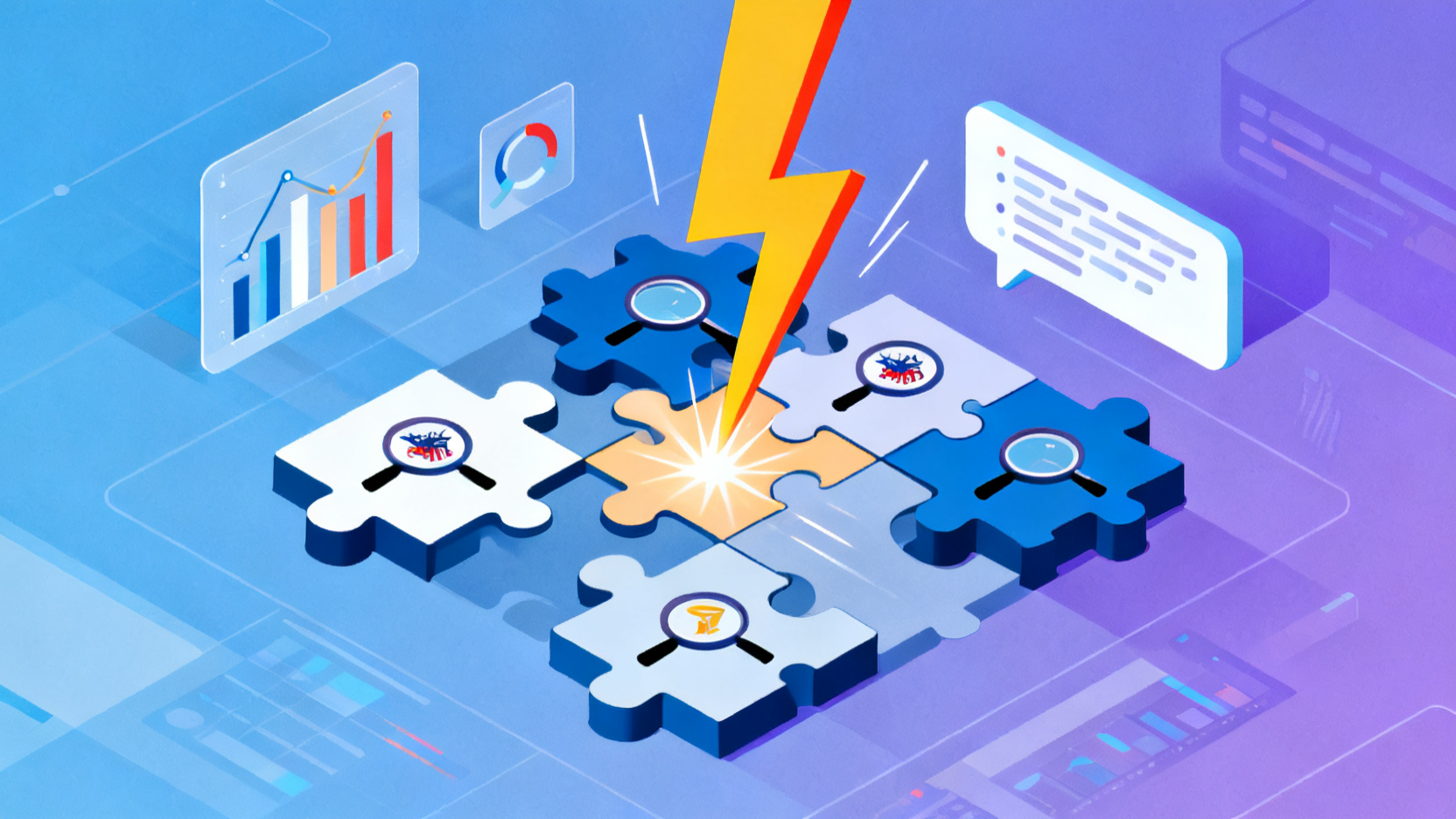
Most users treat Monica as a simple chatbot—but power users chain prompts to auto-generate deep competitor insights. This hidden workflow cuts research time by 70% and delivers structured, actionable intel without manual copy-pasting or spreadsheet juggling.
Spending hours manually comparing competitors’ pricing, messaging, and feature sets? You’re not alone. Most professionals using AI tools for professionals like Monica stop at surface-level queries—missing a powerful, built-in technique that turns fragmented data into strategic intelligence in seconds.
Here’s the secret: Monica supports implicit prompt chaining—a little-known workflow where your follow-up prompts automatically inherit and refine prior context without resetting the conversation. This isn’t just convenient—it’s transformative for competitive analysis and a prime example of AI automation workflows that save time for solopreneurs and freelancers alike.
Before vs. After: Manual Research vs. AI-Powered Competitor Analysis
Before: You open five browser tabs, copy-paste competitor claims into notes, manually compare features in a spreadsheet, and still miss subtle positioning shifts. Output is messy, unstructured, and takes 1–2 hours.
After: With prompt chaining, Monica auto-aggregates, compares, and summarizes key differentiators across 3–5 competitors in under 10 minutes. The output is clean, client-ready, and includes strategic recommendations—all from one continuous thread. This is especially valuable for best AI tools for freelance writers 2024 who need rapid market insights.
The Hack: 4-Step Prompt Chaining Workflow for Competitive Intelligence
- Seed with a structured competitor list. Start with: “Analyze these 3 competitors: [Competitor A], [Competitor B], [Competitor C]. For each, extract their core value proposition, pricing model, and target audience.”
- Chain with a comparative directive. In your next message (no new chat!), say: “Now compare them side-by-side on differentiation, pricing transparency, and emotional hooks used in their homepage copy.” Monica retains all prior data.
- Refine with a strategic ask. Follow up with: “Based on this comparison, what’s our biggest opportunity gap? Suggest 3 unique angles we could own.”
- Export cleanly. Use Monica’s ‘Copy as Markdown’ or ‘Export to Notion’ option to preserve formatting—no reformatting needed.
Pro tip: Add “Keep responses concise, use bullet points, and avoid fluff” to your first prompt to force high-signal output.
Real Example: SaaS Startup Messaging Audit Using AI for Freelancers
A freelance consultant used this workflow to help a client reposition their email automation tool. They analyzed ConvertKit, MailerLite, and Beehiiv in under 12 minutes:
- First prompt extracted each brand’s headline promise and pricing tiers.
- Second prompt revealed that only Beehiiv emphasized “creator ownership”—a gap the client could exploit.
- Third prompt generated three fresh messaging angles centered on “data sovereignty,” which became the core of their new landing page.
This entire process—once a half-day slog—was done before lunch. Perfect for AI tools for solopreneurs racing against deadlines or managing multiple clients with limited bandwidth.
Tweetable Insight
Tip: “Most people use AI tools wrong. The real power comes from chaining prompts—not single queries—to build intelligence layer by layer.”
Expert Insight
Power users often rely on this technique because it dramatically improves output quality while reducing manual effort. Instead of treating AI as a Q&A box, they use it as a thinking partner that remembers, refines, and reasons across multiple steps.
Try It Yourself: Boost Your AI Productivity Today
If you want to test this workflow yourself—especially if you’re using AI productivity tools for client work or personal projects—you can explore Monica’s full capabilities (including seamless Notion and browser integrations) and try the same trick. It’s one of the most underrated AI automation workflows for freelance writers 2024 and indie founders alike.
Frequently Asked Questions
Does Monica remember context between prompts automatically?
Can this workflow replace traditional competitor analysis tools?
Is this useful for non-SaaS businesses?
How does this compare to using ChatGPT for competitor research?

Free access to GPT-4o & Claude 3.5
Claim now and boost your productivity together!

Claire
AI Algorithm Engineer
Updated Apr 17, 2026